Continuous Glucose Monitoring: What It Can and Can't Tell You
Continuous glucose monitors (CGMs) are small sensors that track blood sugar in real time. They are standard, well-supported care for people with diabetes, and they have recently become popular in the wellness world for people without diabetes. Here is what the current evidence says about using a CGM for general metabolic health and weight loss.
Key Points
- CGMs are well-established for people with diabetes
- For people without diabetes, the evidence is still mixed
- A 2026 meta-analysis found improved glucose but no significant effect on body weight
- CGMs can support awareness and behavioral change
- Professional guidance, not a device alone, is what turns data into results
What a CGM Does
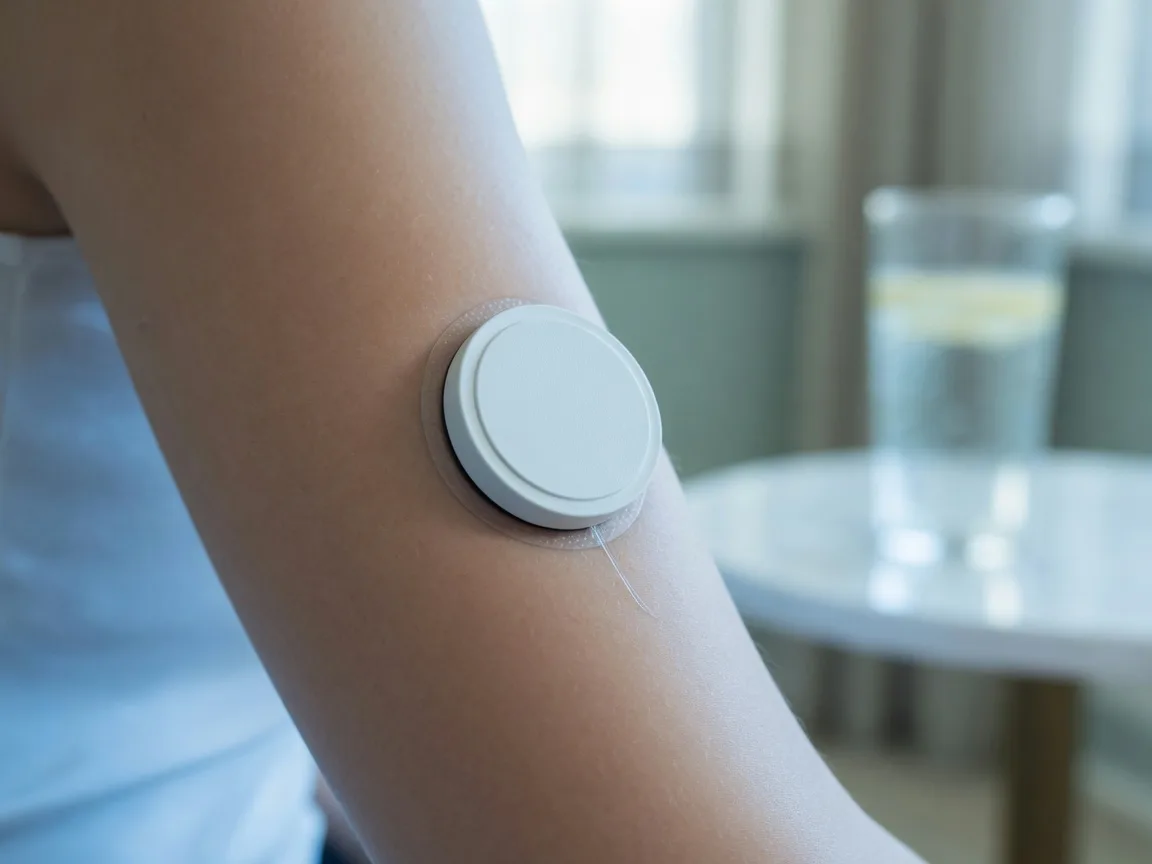
A continuous glucose monitor is a small sensor worn on the body, usually the upper arm, that measures glucose levels in the fluid around cells every few minutes. It sends readings to a phone or receiver, so you can see how food, activity, stress and sleep affect your blood sugar throughout the day.
For people with diabetes, CGMs are a proven, widely recommended tool for managing glucose. The American Diabetes Association recommends CGM for anyone with diabetes who could benefit from it.
What the Evidence Shows for People Without Diabetes
For people without diabetes, the picture is more cautious. A 2026 systematic review with meta-analysis found that CGM use in non-diabetic populations improved average blood glucose compared with controls, but found no significant effect on body mass index. In other words, wearing a CGM may change glucose patterns, but the evidence does not yet show it leads to weight loss on its own.
No major medical society currently recommends routine CGM for people without diabetes, and there are no established standards for interpreting the readings in that group. The technology is promising, but it is not a proven weight-loss tool.
The Value: Awareness and Behavior
Where CGMs do show value for people without diabetes is awareness. Seeing how a particular meal or habit affects your glucose in real time can make abstract advice concrete and encourage changes like choosing lower-glycemic foods and more balanced meals.
That kind of biofeedback can support healthier habits, but it works best when paired with professional guidance that helps you interpret the data and act on it. A device alone rarely changes outcomes.
The Limits: What a CGM Can't Do
A CGM measures glucose; it does not measure body composition, muscle mass, or overall metabolic health. It cannot tell you whether you are losing fat or muscle, and it is not a substitute for a medical evaluation.
If you are managing weight, the most useful information is often not a single glucose number but the full picture: body composition, habits, energy and how your body responds over time. That is where a structured program with professional support adds the most value.
How This Fits Into Weight Management at Thrive
At Thrive EECP in Draper, weight management programs combine more than 20 years of experience in health and wellness with weekly in-clinic support and Styku 3D body composition tracking, so you measure real change in fat and muscle, not just numbers on a screen.
We serve adults from Draper, Sandy, South Jordan, Riverton, Herriman, Cottonwood Heights, Midvale, Murray, Lehi, Alpine, Highland, American Fork and the surrounding South Salt Lake Valley and northern Utah County. A free consultation is the first step, with no obligation.
Sources & References
Independent, authoritative sources used in this article, linked so you can verify the details yourself. Information here is educational and not a substitute for medical advice.
- Continuous glucose monitoring in non-diabetic populations: a systematic review with meta-analysis (European Journal of Medical Research, 2026)
- The use of continuous glucose monitoring in people living with obesity, intermediate hyperglycemia or type 2 diabetes (Diabetologia, 2025)
- American Diabetes Association Standards of Care in Diabetes, 2026
Want to Explore This Further?
This article is part of the Thrive EECP Health Library in Draper, Utah. If the topic above sounds relevant to you, the next step is a free, no-pressure conversation about your goals.
About the Author
This article was authored and curated by Phil Kim for the Thrive EECP Health Library, with content guidance from the Thrive team. It is educational information, not medical advice, and does not create a patient relationship. Always consult a qualified healthcare professional about your health.