
Poor Circulation & EECP
EECP and Poor Circulation
Poor circulation means blood is not moving through the body as efficiently as it should, and it can show up as cold hands and feet, tired legs, slow healing or reduced energy. EECP may improve circulation by gently supporting blood flow with each heartbeat, without surgery. Results vary, and EECP is not a cure for any condition.
- May Improve Circulation
- Non-Invasive
- No Downtime
- Utah's Only EECP Clinic
Overview
Why Circulation Matters and How EECP May Help
Your circulatory system delivers oxygen and nutrients to every cell and carries waste away. When blood flow is supported, energy, recovery and healing all stand to benefit. Over time, many adults notice circulation changes: cold extremities, slower recovery after exercise or reduced exercise tolerance.
EECP is a non-invasive therapy designed to support blood flow. This page looks at the signs of poor circulation, how EECP may improve circulation and what the evidence says, in plain language.
Common Signs of Poor Circulation
Signs can include cold hands or feet, numbness or tingling in the extremities, tired or heavy legs, slow-healing cuts, varicose veins and reduced stamina during activity. These symptoms have many possible causes, from sedentary habits to conditions like peripheral artery disease or diabetes.
Because the causes vary widely, persistent symptoms deserve a professional evaluation rather than assumptions. A doctor can help identify what is actually going on before any therapy is considered.
How EECP May Improve Circulation
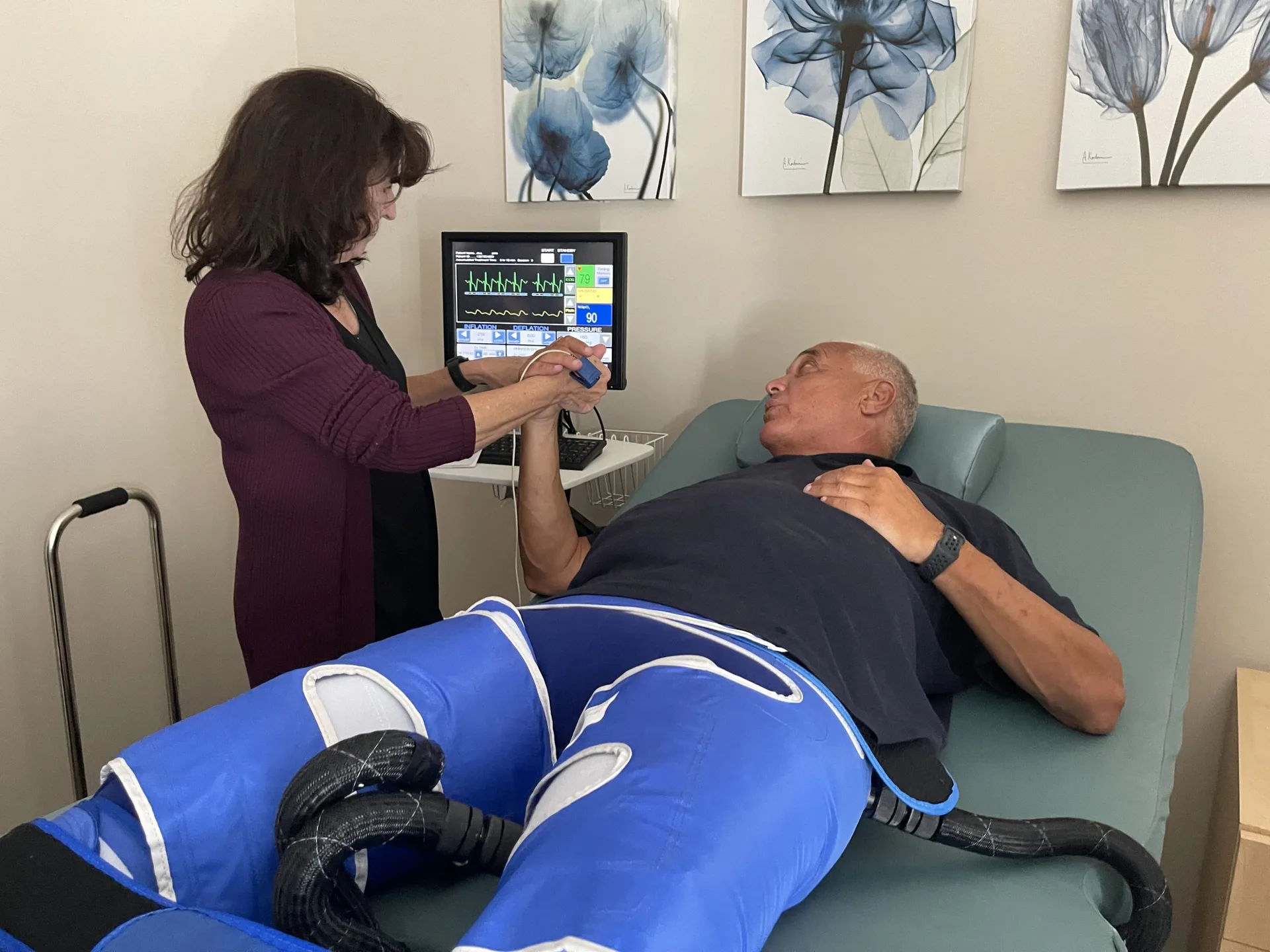
EECP wraps soft cuffs around the calves, thighs and hips and inflates them in rhythm with your heartbeat. During the heart's resting phase, the cuffs gently push blood from the lower body toward the heart; just before the heart contracts, they release. This coordinated motion is designed to increase blood flow and reduce the workload on the heart.
That is why we say EECP may improve circulation: it supports the body's natural blood flow rather than forcing a change. The effect builds over a course of sessions, typically about 35 one-hour treatments.
What the Research Suggests
EECP has been studied most extensively in cardiovascular settings. A randomized sham-controlled study published in the journal Circulation in 2010 found EECP significantly improved flow-mediated dilation, a measure of blood vessel function, in patients with chronic angina compared with a sham group.
Improved vascular function is one mechanism by which EECP may improve circulation. As with all research on this site, we describe what studies found without exaggeration: EECP may support, and individual results vary.
Is EECP Right for You?
EECP is a medical treatment, not a spa service. Suitability depends on your health history, and an evaluation with a qualified professional comes first. People with certain conditions, such as severe aortic insufficiency or uncontrolled arrhythmias, should not receive EECP.
If you have circulation concerns, the right next step is a conversation with your doctor plus an evaluation at the clinic.
Explore Related Topics
Questions
Poor Circulation FAQs
Straight answers to the questions patients ask us most. Something else on your mind? Give us a call or request a free consultation.
View All EECP FAQs Can EECP improve circulation?
EECP is designed to support blood flow, and research, including a 2010 Circulation study, found improvements in blood vessel function in patients treated with EECP. We describe it as may improve circulation: the therapy supports the body's natural flow, and individual results vary.
How many EECP sessions will I need?
A common course is about 35 one-hour sessions spread over several weeks. The exact plan is individualized after an evaluation.
Is EECP painful?
Most people find EECP comfortable. You feel a firm, rhythmic squeezing as the cuffs inflate, similar to a blood pressure cuff, and the pressure can be adjusted. Sessions are non-invasive with no recovery time.
Does EECP cure circulation problems?
No. EECP is not a cure for any condition. It is a non-invasive therapy designed to support blood flow, and it works best inside a plan developed with your healthcare team.
Who should not try EECP?
People with certain conditions, including severe aortic insufficiency or uncontrolled arrhythmias, should not receive EECP. An evaluation with a qualified professional determines whether it is appropriate for you.
Where can I get EECP in Utah?
Thrive EECP at 1111 E Draper Pkwy in Draper is Utah's only EECP clinic, serving patients from across the state. Request a free consultation to learn more.
Start Here
Have Questions About EECP?
Book a free consultation to talk with our team, review the research together and find out whether EECP may be worth discussing with your doctor.
Visit the Clinic
A Convenient Draper Location
Thrive EECP
1111 E Draper Pkwy
Draper, UT 84020
By appointment. Call ahead and we will find a time that works for you.
Easily reached from Sandy, South Jordan, Riverton, Herriman, Cottonwood Heights, Midvale, Murray, Lehi, Alpine, Highland and American Fork, along with other South Salt Lake Valley and northern Utah County communities.
Get DirectionsSchedule Online
Book a Consultation
Reserve your appointment directly in the calendar below. Prefer to talk it through first? Call us at 385-330-0358 and our team will help you find a time that works for you.
385-330-0358
Prefer to book by phone
Thrive EECP
1111 E Draper Pkwy
Draper, UT 84020