
Enhanced External Counterpulsation
What Is EECP Therapy?
EECP stands for Enhanced External Counterpulsation. It is a non-invasive therapy in which soft cuffs wrap around the calves, thighs and hips and inflate and deflate in rhythm with your heartbeat, designed to support blood flow back to the heart and throughout the body. A typical course is about 35 one-hour sessions, with an evaluation before you start.
- FDA-Cleared
- Non-Invasive
- No Surgery
- Rare in Utah
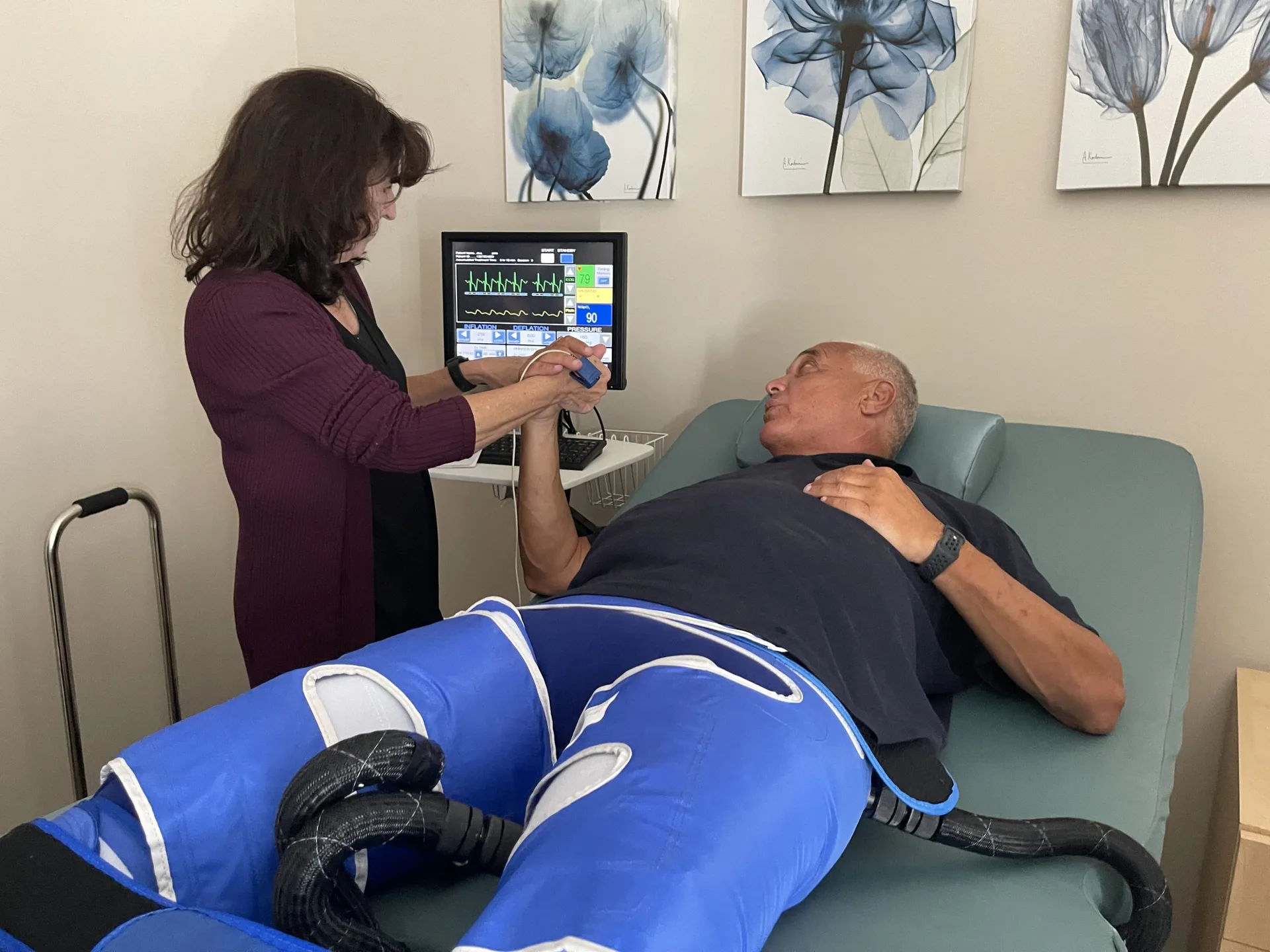
The Basics
What Does EECP Stand For?
EECP is short for Enhanced External Counterpulsation. Each word describes part of the therapy: it is enhanced, because the system is finely timed; external, because everything happens outside the body; and counterpulsation, because it works in opposition to your own pulse.
In plain terms, EECP gives your circulatory system a gentle, rhythmic assist while you rest. There are no needles, no incisions and no downtime, and the treatment is guided by your own heartbeat, so every session is personalized to you.
EECP at a Glance
- FDA-cleared for refractory angina, with decades of published research
- Sessions last about 60 minutes, often spent resting or reading
- Cuff pressure is coordinated with your own heartbeat
- Utah's only EECP clinic, serving patients from across the state
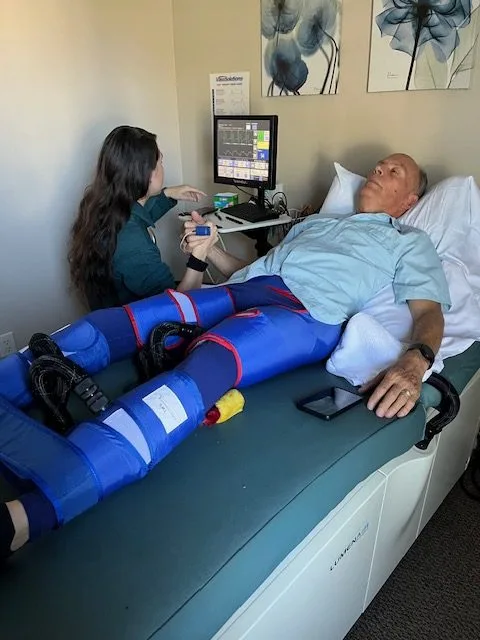
Mechanics
How Does EECP Work?
During treatment, sensors monitor your cardiac cycle. At the moment your heart rests between beats, the cuffs inflate, gently pushing blood from the lower body toward the heart. Just before your heart contracts, the cuffs rapidly release, which is designed to reduce the workload on the heart.
Over a course of sessions, this repeated, coordinated action is designed to support blood flow, circulation and the body's natural vascular function. Researchers have studied this approach for decades, with a foundational body of evidence in angina and heart failure.
In simple terms: EECP gives your circulatory system a gentle, rhythmic workout while you rest, without surgery, medication or recovery time.
Session Experience
What Happens During an EECP Session?
An EECP session is designed to be comfortable enough that most patients look forward to it as quiet time in their day.
Settle In
You lie on a comfortable treatment bed. Soft cuffs are placed around your calves, thighs and hips.
Relax Through the Session
The system inflates and deflates the cuffs in sync with your heartbeat for about an hour.
Get On With Your Day
When the session ends, the cuffs come off and you carry on, with no recovery time needed.
Who It's For
Who May Discuss EECP With a Professional?
EECP is a medical treatment, not a spa service. It may be worth discussing with a qualified healthcare professional if you are interested in:
- Circulation support without invasive procedures
- Angina, heart failure or cardiovascular health questions
- Recovery and exercise capacity support
- Neuropathy symptoms where circulation may play a role
- A non-invasive option alongside a doctor-approved plan
EECP is not appropriate for everyone, and we never claim it can cure any condition. Your first step should always be a conversation with your doctor and an evaluation with an experienced provider.
Clearance & Guidelines
Is EECP FDA-Cleared?
Yes. EECP devices are FDA-cleared for the treatment of refractory angina. The FDA cleared external counterpulsation devices through the 510(k) pathway starting in 1995, and in December 2013 it issued a final order reclassifying these devices from Class III to Class II based on evidence of safety and effectiveness for that intended use.
The American Heart Association and American College of Cardiology guidelines state that enhanced external counterpulsation may be considered for the relief of refractory angina in patients with stable ischemic heart disease.
Questions
Frequently Asked Questions
Straight answers to the questions patients ask us most. Something else on your mind? Give us a call or request a free consultation.
View All EECP FAQs What is EECP therapy?
EECP stands for Enhanced External Counterpulsation. It is a non-invasive therapy in which soft cuffs wrap around the calves, thighs and hips and inflate and deflate in rhythm with your heartbeat, designed to support blood flow back to the heart and throughout the body.
Is EECP covered by Medicare?
Under CMS National Coverage Determination 20.20, Medicare covers EECP for disabling chronic stable angina (Canadian Cardiovascular Society Class III or IV) when a cardiologist or cardiothoracic surgeon determines you are not a good candidate for angioplasty or bypass surgery. Medicare does not cover other conditions, and patients should call the clinic to verify their coverage.
How many EECP sessions are typical?
A common course is about 35 one-hour sessions spread over several weeks. The exact plan depends on your situation and is set with your provider after an evaluation.
What are the side effects of EECP?
Most people tolerate EECP well. Reported effects are generally mild and may include leg discomfort or skin irritation where the cuffs sit. EECP is not appropriate for everyone, which is why an evaluation and medical clearance come first.
Who qualifies for EECP?
EECP is most commonly considered for people with chronic refractory angina who are not good candidates for stents or bypass surgery. Suitability depends on your health history, and a qualified professional must evaluate you before treatment.
How is EECP different from stents or bypass surgery?
Stents and bypass surgery physically restore blood flow through the coronary arteries. EECP is an external, non-invasive therapy that supports blood flow during each heartbeat. It is not a replacement for surgery, and Medicare covers it specifically for patients who are not candidates for those procedures.
How much does EECP cost?
Cost depends on your plan, your diagnosis and the length of the course. The clearest way to get an accurate answer is to call the clinic at 385-330-0358; the team explains costs during a free consultation.
Is EECP non-invasive?
Yes. EECP involves no surgery, no needles and no incisions. You relax on a treatment bed for about an hour while the cuffs do their work, with no recovery time afterward.
Where can I get EECP therapy in Utah?
Thrive EECP at 1111 E Draper Pkwy in Draper is Utah's only EECP clinic, and we serve patients from across the state, including Salt Lake City, Provo and Orem, Ogden and St. George.
Start Here
Have Questions About EECP?
Book a free consultation to talk with our team, review the research together and find out whether EECP may be worth discussing with your doctor.
Visit the Clinic
A Convenient Draper Location
Thrive EECP
1111 E Draper Pkwy
Draper, UT 84020
By appointment. Call ahead and we will find a time that works for you.
Easily reached from Sandy, South Jordan, Riverton, Herriman, Cottonwood Heights, Midvale, Murray, Lehi, Alpine, Highland and American Fork, along with other South Salt Lake Valley and northern Utah County communities.
Get DirectionsSchedule Online
Book a Consultation
Reserve your appointment directly in the calendar below. Prefer to talk it through first? Call us at 385-330-0358 and our team will help you find a time that works for you.
385-330-0358
Prefer to book by phone
Thrive EECP
1111 E Draper Pkwy
Draper, UT 84020