EECP vs. Compression Therapy: How Circulation Therapies Compare
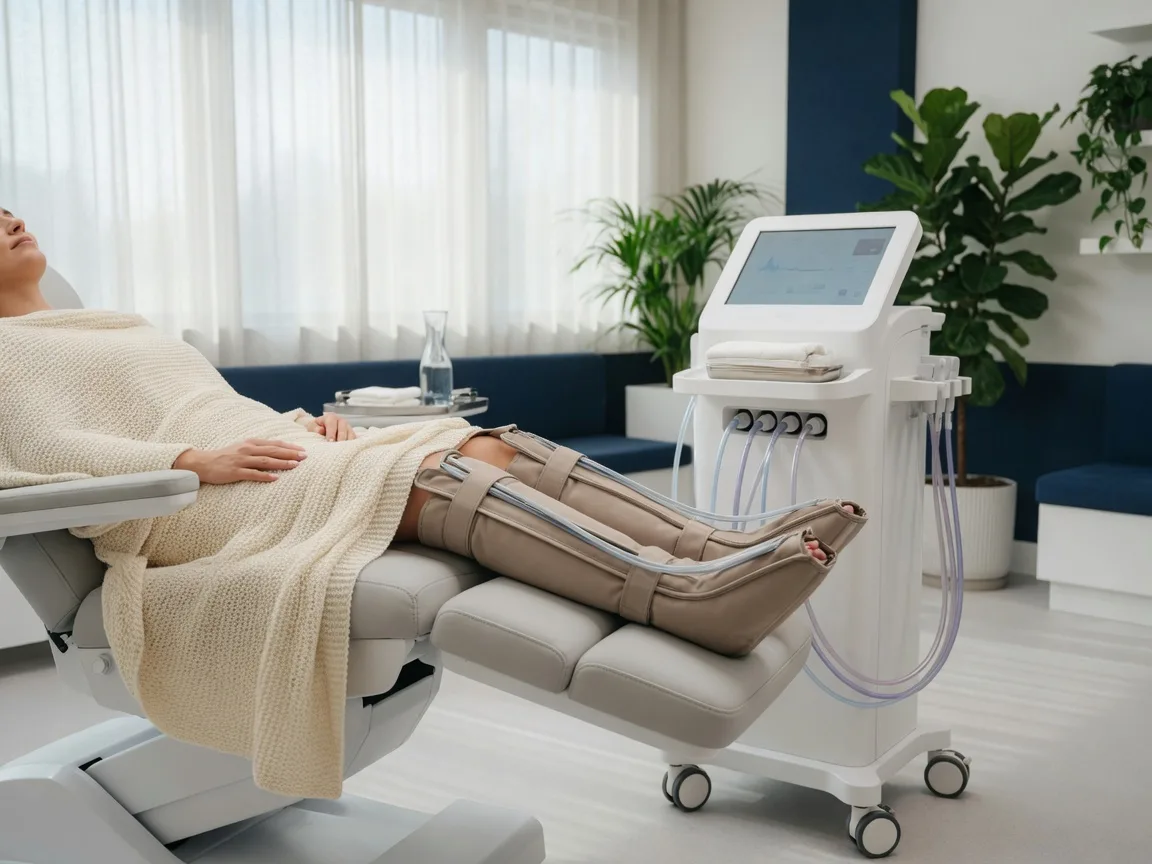
Both EECP and compression therapy wrap the legs in inflatable cuffs, but they are not the same treatment. EECP is timed to your heartbeat and used in cardiovascular care, while compression therapy uses its own programmed rhythm to support circulation and recovery. Here is how the two compare.

Key Points
- EECP synchronizes cuff inflation with your cardiac cycle
- Compression therapy runs on its own programmed rhythm
- EECP is FDA-cleared for specific cardiovascular uses
- Compression is commonly used for circulation, swelling and recovery support
- Both are non-invasive, and both begin with an evaluation
The Quick Answer
EECP, or Enhanced External Counterpulsation, inflates cuffs around the calves, thighs and hips in exact coordination with your heartbeat. The inflation happens during the moment your heart is at rest, which is designed to support blood flow back toward the heart. Compression therapy inflates similar cuffs in a programmed rhythmic wave to support circulation and lymphatic flow in the legs.
In short: EECP works with your cardiac cycle, while compression therapy works on its own schedule. They are complementary rather than interchangeable.
What EECP Is For
EECP has decades of research behind it and is FDA-cleared for specific cardiovascular uses, including chronic stable angina. Studies such as MUST-EECP and PEECH have examined its effects on symptoms, exercise capacity and quality of life.
Because it is timed to the heartbeat, EECP requires an evaluation of your cardiac history first, and it is not right for everyone.
What Compression Therapy Is For
Compression therapy applies external pressure in a wave pattern, most often to the legs and feet. It is widely used to help move fluid out of the lower legs, support circulation and aid recovery after activity.
Research on pneumatic compression is strongest for swelling reduction and recovery support rather than cardiac effects. It is a gentler, more general-purpose circulation tool.
Which One Is Better?
It depends on your goals and your health history, which is exactly why the question belongs in a consultation rather than a search result.
Thrive EECP in Draper offers both, so patients can discuss whether circulation support, cardiac considerations, recovery goals or a combination point to one therapy, the other, or both.
Sources & References
Independent, authoritative sources used in this article, linked so you can verify the details yourself. Information here is educational and not a substitute for medical advice.
Want to Explore This Further?
This article is part of the Thrive EECP Health Library in Draper, Utah. If the topic above sounds relevant to you, the next step is a free, no-pressure conversation about your goals.
About the Author
This article was authored and curated by Phil Kim for the Thrive EECP Health Library, with content guidance from the Thrive team. It is educational information, not medical advice, and does not create a patient relationship. Always consult a qualified healthcare professional about your health.