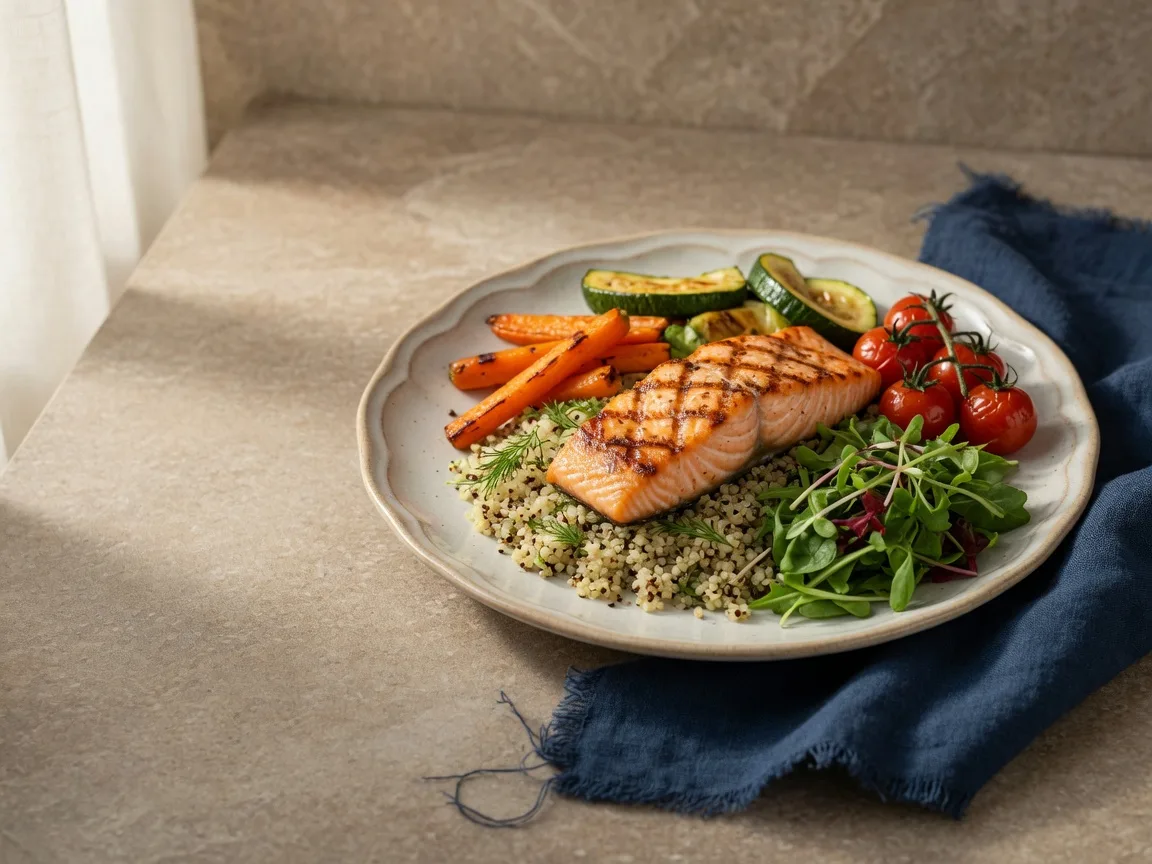
Heart-Healthy Eating: What the 2026 Dietary Guidance Says
Yes, what you eat matters for your heart and your circulation. In March 2026 the American Heart Association published updated dietary guidance for cardiovascular health, and the 2025-2030 Dietary Guidelines for Americans followed in January 2026. Both point the same direction: a plant-forward pattern built on vegetables, fruits, whole grains and healthy proteins, with less sodium, added sugar and ultra-processed food.
Key Points
- The AHA's 2026 guidance focuses on overall eating patterns, not single foods
- Vegetables, fruits and whole grains form the base of a heart-healthy diet
- Plant proteins, fish and lean options are preferred over red and processed meats
- Less sodium, added sugar and ultra-processed food supports blood pressure
- Diet works best alongside movement, sleep and professional guidance
What the 2026 AHA Guidance Says
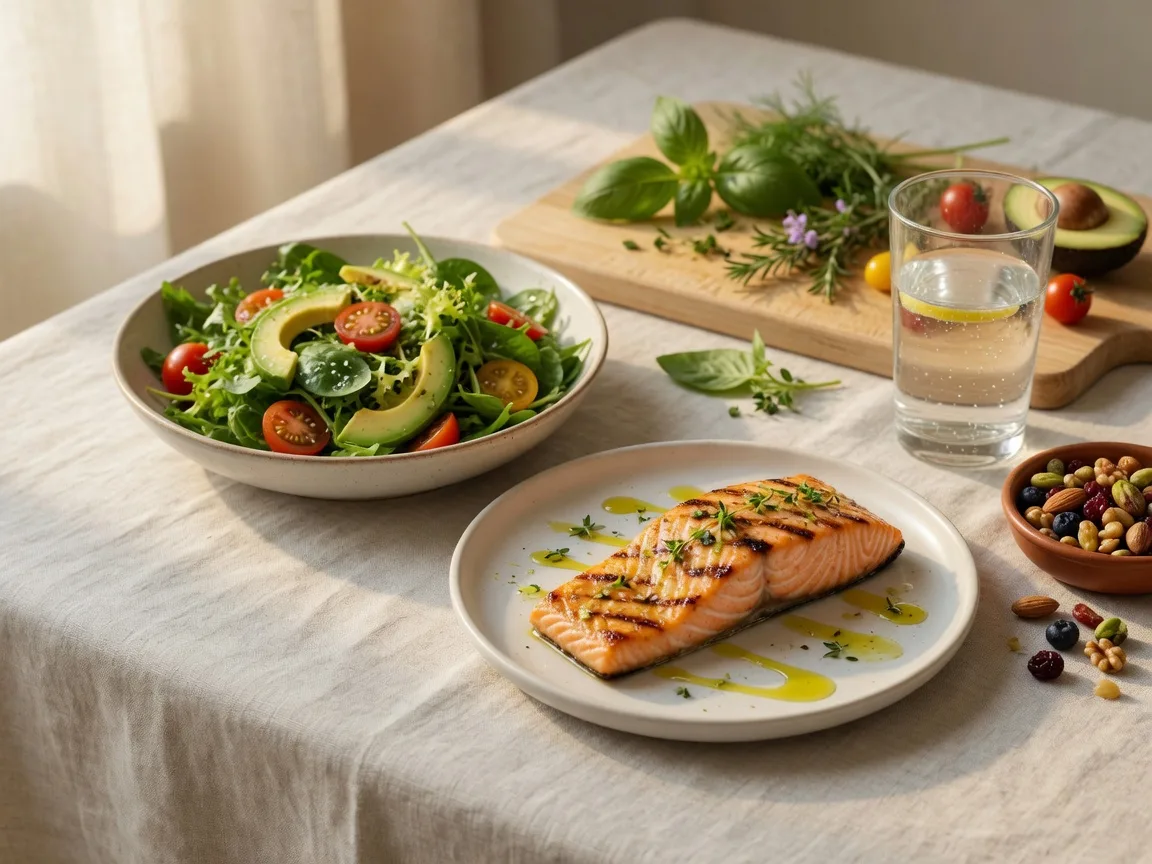
The American Heart Association's 2026 Dietary Guidance to Improve Cardiovascular Health updates its earlier recommendations and lists nine features of a heart-healthy diet: balance energy intake with expenditure to reach or maintain a healthy weight; eat plenty of vegetables and fruits in a wide variety; choose whole grains over refined grains; choose healthy proteins such as plant-based proteins, fish and seafood, low-fat or fat-free dairy, and lean meats while limiting red and processed meats; prefer liquid plant oils like olive oil over tropical oils and fatty meats; choose minimally processed foods over ultra-processed foods; minimize added sugars; reduce sodium; and limit alcohol if you drink.
The theme is consistency, not perfection. The guidance emphasizes that most people currently get more protein from meat than from plants, and it supports a shift toward a plant-forward pattern rather than a single miracle food.
What This Means for Weight Management
The same guidance is weight-management guidance. Balancing energy intake with expenditure is the first item on the list, and dietary patterns built on vegetables, fruits and whole grains tend to be more filling and more sustainable than restrictive dieting.
For people who have hit a weight-loss plateau, a pattern-based approach often helps more than another strict plan. That is exactly the kind of support a medically supervised program provides: personalized nutrition guidance, weekly check-ins and objective tracking so you can see what is actually changing.
Circulation and Blood Pressure
The guidance highlights potassium-rich plant foods such as vegetables, fruits, beans and nuts, along with plant oils, as supporting heart health. Cutting sodium, added sugars and ultra-processed foods helps blood pressure and vascular function, which are central to healthy circulation.
None of this replaces medical care, and individual needs vary. But the evidence is consistent: a heart-healthy eating pattern supports the same systems that circulation therapies are designed to support.
Building a Sustainable Pattern in Draper
You do not have to overhaul everything at once. Small, repeatable changes, like adding a vegetable to one meal a day or swapping a sugary drink for water, are the kind of steps a Thrive program can help you build on with weekly support and accountability.
Thrive EECP is located at 1111 East Draper Parkway, Draper, UT 84020, and serves patients from Sandy, South Jordan, Riverton, Herriman, Cottonwood Heights, Midvale, Murray, Lehi, Alpine, Highland, American Fork and the surrounding area. To learn whether a personalized weight-management program fits your goals, request a free consultation or call 385-330-0358.
Sources & References
Independent, authoritative sources used in this article, linked so you can verify the details yourself. Information here is educational and not a substitute for medical advice.
- AHA: 2026 Dietary Guidance to Improve Cardiovascular Health (Circulation)
- AHA Newsroom: Following 9 Key Steps for a Lifetime of Eating Well
- AHA Newsroom: New Dietary Guidelines Underscore Importance of Healthy Eating (Jan 2026)
- ACC: Food and Health, Nutrition for Prevention and Management of Cardiovascular Disease (2026)
Want to Explore This Further?
This article is part of the Thrive EECP Health Library in Draper, Utah. If the topic above sounds relevant to you, the next step is a free, no-pressure conversation about your goals.
About the Author
This article was authored and curated by Phil Kim for the Thrive EECP Health Library, with content guidance from the Thrive team. It is educational information, not medical advice, and does not create a patient relationship. Always consult a qualified healthcare professional about your health.