Red Light Therapy at Home vs. In-Clinic: What's the Difference?
Home red light panels and clinical red light therapy both use the same family of wavelengths, but they are not equivalent experiences. The differences come down to power output, treatment time, device quality and professional oversight. Here is what to weigh if you are considering either.
Key Points
- Clinical systems generally deliver higher power density (irradiance) than home devices
- The dose matters: higher irradiance means shorter sessions to reach a target dose
- Professional devices are typically more precisely validated and calibrated
- Home devices can be a convenience, but results depend heavily on the unit
- A clinician can tailor wavelength, distance and session length to your goals
It Comes Down to Dose
Photobiomodulation research uses a concept called dose: the amount of light energy delivered to tissue, measured in joules per square centimeter. Dose depends on irradiance, or power density, and time. Organizations such as the World Association of Photobiomodulation Therapy publish dosage guidance, and clinical devices are designed to deliver effective doses consistently.
Because clinical systems generally operate at higher power density, they can reach an effective dose in a shorter session, typically 10 to 20 minutes. Many home devices run at lower power and need longer sessions, and cheaper units may deliver too little to matter.
Device Quality and Validation
Clinical and medical-grade systems are built to meet engineering standards, with validated wavelengths in the red and near-infrared range and verified output. Consumer devices vary widely in quality, output consistency and whether their claims are backed by meaningful testing.
If you buy a home device, look for one with published specifications, such as wavelength and irradiance at a stated distance, from a reputable manufacturer, and keep expectations honest.
The Oversight Difference
In a clinic, a trained team sets the session around your goals and treatment area and adjusts distances and times. At home, you are the operator, and dosing errors are easier to make.
Red light therapy is generally considered safe and well tolerated when used properly, but it is not a replacement for medical care, and anyone with a health condition should check with a qualified professional first.
What Thrive Offers
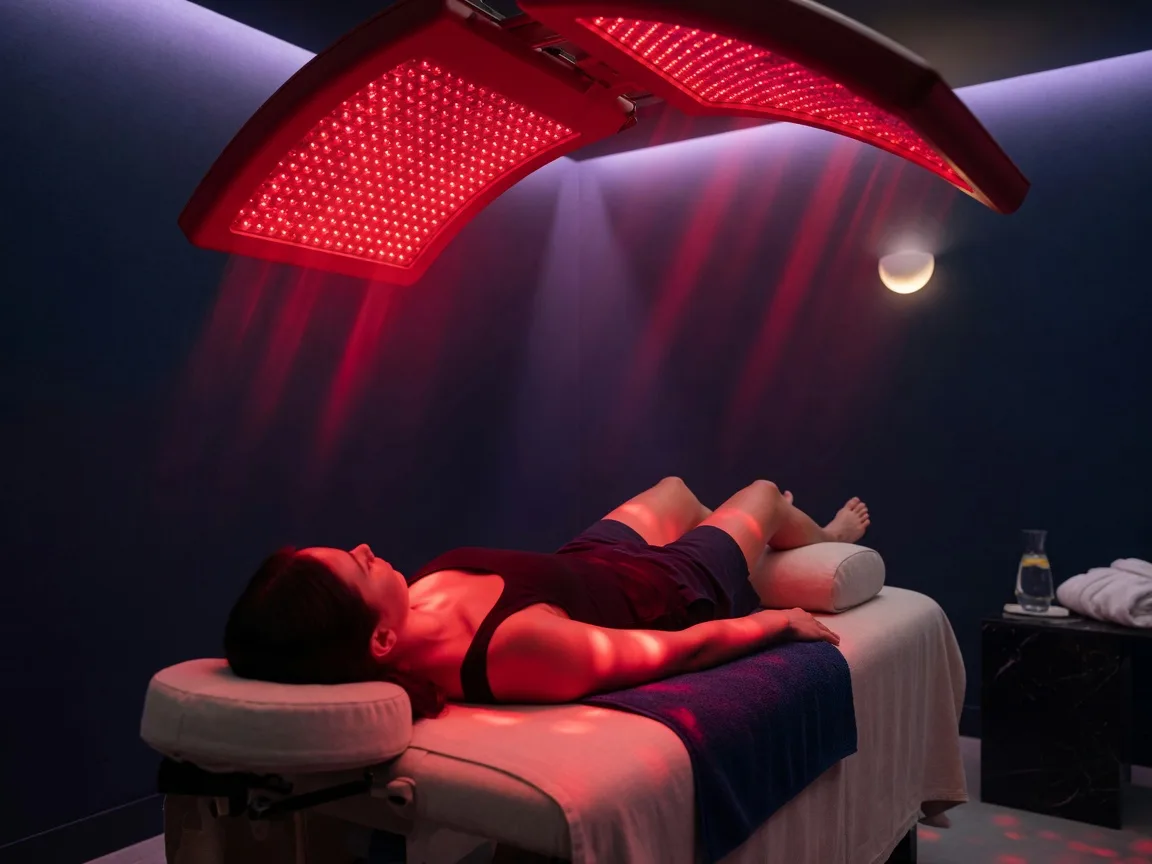
Thrive EECP in Draper uses in-clinic red light therapy panels as part of recovery, circulation and wellness programs. For many people, the practical difference is simple: a clinical session removes the guesswork.
The right choice depends on your goals, budget and consistency. A consultation can help you decide whether home, clinic, or a combination fits your situation.
Sources & References
Independent, authoritative sources used in this article, linked so you can verify the details yourself. Information here is educational and not a substitute for medical advice.
Want to Explore This Further?
This article is part of the Thrive EECP Health Library in Draper, Utah. If the topic above sounds relevant to you, the next step is a free, no-pressure conversation about your goals.
About the Author
This article was authored and curated by Phil Kim for the Thrive EECP Health Library, with content guidance from the Thrive team. It is educational information, not medical advice, and does not create a patient relationship. Always consult a qualified healthcare professional about your health.