
How Accurate Is a Styku 3D Body Scan? What the Validation Research Shows
A common question about Styku 3D body scanning is whether the measurements are accurate. The direct answer: peer-reviewed validation studies find Styku is a reliable, radiation-free tool for measuring body shape and tracking changes over time, though DEXA remains the more precise one-time reference standard. Newer research also highlights an important nuance: how well a 3D scan agrees with DEXA can depend on which DEXA system is used as the reference. Here is what the research actually shows.
Key Points
- A 2022 validation study in Clinical Nutrition reported a small average difference versus DEXA for body fat percentage (about 1.65 percentage points)
- A 2024 secondary analysis in adults with overweight and obesity confirmed strong agreement with DEXA for fat-free mass (CCC 0.97) and fat mass (CCC 0.95)
- 3D scanning is highly repeatable: test-retest variation for body fat percentage was about 0.60% in the same study
- A 2026 study found 3D scanner agreement with DEXA can vary depending on which DEXA device is the reference
- 3D optical scanning estimates body fat from surface shape, so it is best used to track change over time
How Accurate Is Styku Compared With DEXA?
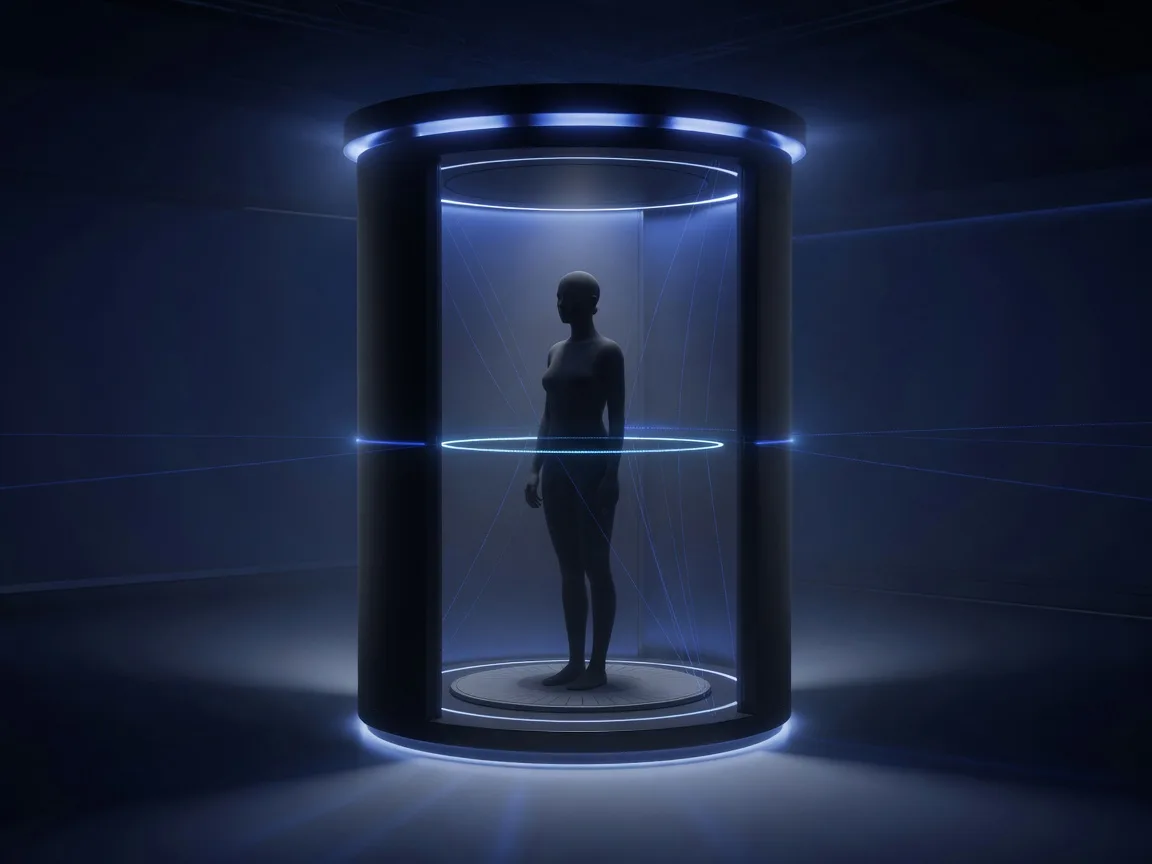
Styku is a 3D optical body scanner that measures your body's surface shape and estimates body fat percentage, lean mass and dozens of circumferences. A 2022 validation study published in Clinical Nutrition compared the Styku S100 with DEXA and found a small average difference in body fat percentage (about 1.65 percentage points), with high test-retest precision: whole-body volume within 1.1 liters, fat mass within 0.41 kg and body fat percentage within 0.60%.
A 2024 secondary analysis of a weight-loss trial in adults with overweight and obesity confirmed strong agreement between Styku 3DO and DEXA for fat-free mass (concordance correlation coefficient 0.97) and fat mass (0.95), while 3DO outperformed bioelectrical impedance. Styku's own validation model reports correlation coefficients with DEXA of 0.94 for fat mass in women and 0.92 in men, and a 2021 systematic review of 3D body scanners found 3D measurements correlated strongly with DEXA and air-displacement plethysmography.
What Styku Is Best At, and What It Is Not
The research consensus is that 3D optical scanning is a reliable tool for tracking change over time: repeated scans show whether body fat is going down and lean mass is going up, which is exactly what a weight management program needs.
The limitations are also becoming clearer. A 2026 study in the International Journal of Obesity compared 3D optical scanners against three different DEXA systems and found that agreement varied meaningfully depending on which DEXA device served as the reference. And because 3D scanning estimates body fat from surface-shape equations rather than measuring it directly, a single scan's fat percentage carries more error than DEXA, and accuracy can vary at very high or very low body fat levels.
That is why Styku is best used the way Thrive uses it: as a repeatable, radiation-free measurement taken at the start of a program and at regular check-ins, so progress is visible beyond the scale.
Why This Matters for Weight Management
The scale cannot tell you whether you are losing fat, muscle or water. A Styku scan at baseline and at follow-ups shows changes in body fat percentage, lean mass and measurements, which helps you and your care team make informed adjustments.
For adults in weight management programs, including those on GLP-1 medications, tracking body composition is especially useful because some weight loss can include lean mass. Seeing the full picture supports better decisions about nutrition, activity and medical supervision.
Getting a Styku Scan in Draper, Utah
Thrive EECP in Draper uses Styku 3D body composition technology as part of its medically supervised weight management programs. A scan takes about 40 seconds and is completely non-invasive.
A free weight loss consultation can include a Styku 3D body composition imaging scan as part of the evaluation, so you can see your starting point before you decide on a program. Call 385-330-0358 or request a consultation online. Thrive EECP is located at 1111 East Draper Parkway, Draper, Utah 84020.
Sources & References
Independent, authoritative sources used in this article, linked so you can verify the details yourself. Information here is educational and not a substitute for medical advice.
- Styku Phoenix: predicting DEXA body composition using 3D full body infrared scanning (pilot validation)
- Comparison of body scanner and manual anthropometric measurements of body shape: systematic review (2021)
- Reference method matters: DXA system differences influence agreement with 3DO body composition estimates (International Journal of Obesity, 2026)
- 3D optical scanning for body composition: a 4-component model comparison of four commercially available scanners (2020)
- Assessment of clinical measures of total and regional body composition from a commercial 3D optical body scanner (Clinical Nutrition, 2022)
- The applicability of a commercial 3DO body scanner for body composition in Chinese adults with overweight and obesity (2024)
Want to Explore This Further?
This article is part of the Thrive EECP Health Library in Draper, Utah. If the topic above sounds relevant to you, the next step is a free, no-pressure conversation about your goals.
About the Author
This article was authored and curated by Phil Kim for the Thrive EECP Health Library, with content guidance from the Thrive team. It is educational information, not medical advice, and does not create a patient relationship. Always consult a qualified healthcare professional about your health.