
Visceral Fat and Body Composition: Why Where You Carry Weight Matters
Visceral fat is the fat stored deep inside your abdomen, wrapped around your organs. It is linked to higher risk of cardiovascular disease and type 2 diabetes, and it is invisible on the scale. Body composition measurement is one of the only practical ways to see it.
Key Points
- Visceral fat sits deep in the abdomen around internal organs
- It is linked to higher cardiometabolic risk, independent of BMI
- The scale cannot measure it, and neither can BMI
- Imaging-based body composition scans can estimate visceral fat
- Waist circumference is a simple proxy that correlates with it
What Is Visceral Fat?
Your body stores fat in two main places: subcutaneous fat just under the skin, and visceral fat deep inside the abdominal cavity, wrapped around organs like the liver, pancreas and intestines. Visceral fat is the more metabolically active of the two.
It behaves differently from subcutaneous fat. It releases inflammatory signals and free fatty acids that reach the liver first, which is why excess visceral fat is linked to insulin resistance, high blood pressure, fatty liver and higher cardiovascular risk.
Why Does Where You Carry Weight Matter?
Two people can have the same weight and even the same total body fat percentage, with very different health profiles, depending on how much fat is visceral versus subcutaneous. Excess visceral fat predicts cardiovascular events and metabolic problems independent of BMI.
That is why waist circumference is used as a simple risk screen: roughly 40 inches or more for men and 35 inches or more for women indicates elevated risk, because a larger waist tends to mean more visceral fat.
How Is Visceral Fat Measured?
The gold standards are MRI and CT, which directly image the abdominal cavity. Dual-energy X-ray absorptiometry (DXA) provides a fast, low-dose estimate of visceral fat that correlates well with MRI and CT in most people.
Body composition scanning reports visceral fat as a mass or area, with research commonly using thresholds around 100 square centimeters as elevated and 160 as high. Simpler proxies include waist circumference and waist-to-height ratio.
What Does This Mean for Your Weight Loss Plan?
If your goal is health rather than just a number on the scale, body composition tells you what is actually changing: whether you are losing visceral fat, preserving muscle and improving your metabolic picture. Scale weight and BMI cannot answer those questions.
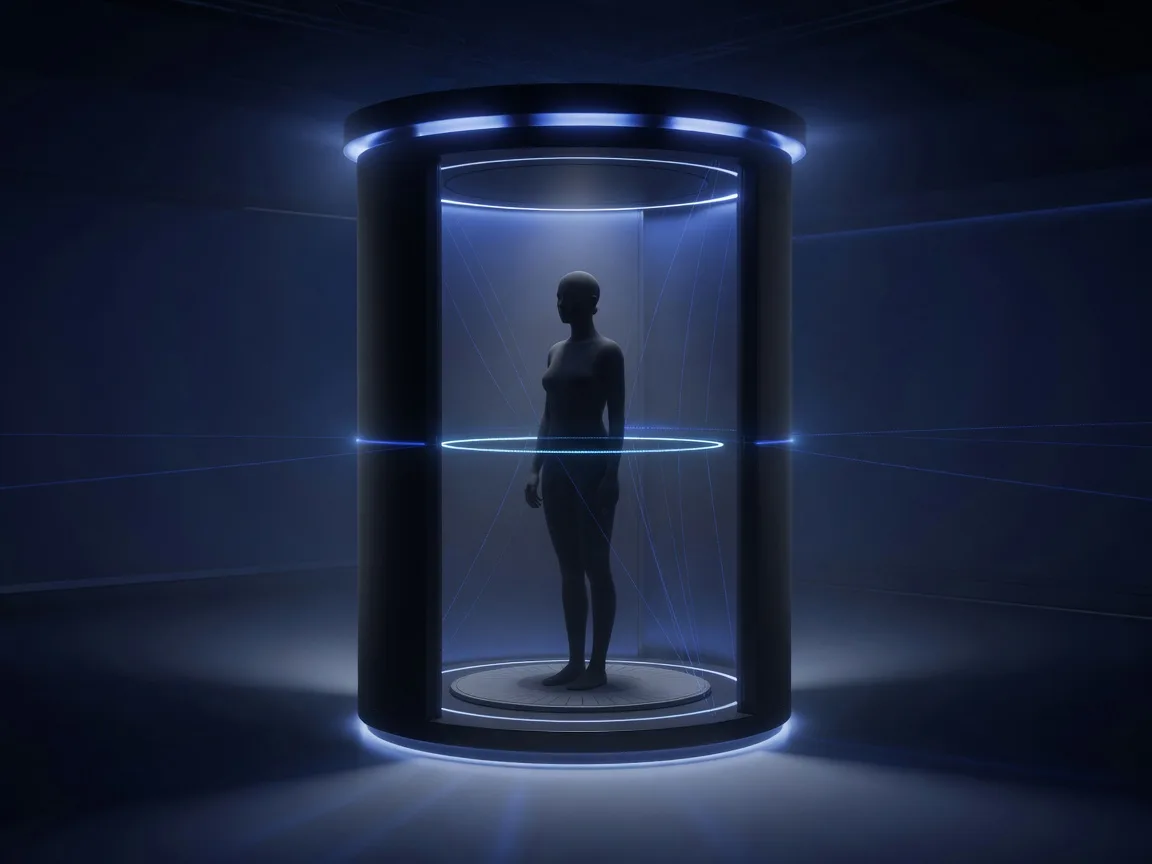
A Styku 3D body scan at Thrive EECP in Draper measures body fat percentage, lean mass and dozens of segmental measurements in about 40 seconds, giving you and your care team a clear picture of progress beyond the scale.
Where to Get a Body Composition Scan in Utah
Thrive EECP is located at 1111 East Draper Parkway, Draper, UT 84020, and serves patients from Sandy, South Jordan, Riverton, Herriman, Cottonwood Heights, Midvale, Murray, Lehi, Alpine, Highland and American Fork. Call 385-330-0358 or request a free consultation to learn more about Styku 3D body composition scanning.
Sources & References
Independent, authoritative sources used in this article, linked so you can verify the details yourself. Information here is educational and not a substitute for medical advice.
Want to Explore This Further?
This article is part of the Thrive EECP Health Library in Draper, Utah. If the topic above sounds relevant to you, the next step is a free, no-pressure conversation about your goals.
About the Author
This article was authored and curated by Phil Kim for the Thrive EECP Health Library, with content guidance from the Thrive team. It is educational information, not medical advice, and does not create a patient relationship. Always consult a qualified healthcare professional about your health.