Peripheral Artery Disease (PAD): Symptoms, Risk Factors and Why Early Evaluation Matters
Peripheral artery disease (PAD) happens when narrowed arteries reduce blood flow to the limbs, most often the legs. The Centers for Disease Control and Prevention estimates about 6.5 million U.S. adults aged 40 and older have PAD, and up to 4 in 10 people with the condition report no classic leg pain. Early evaluation matters because PAD is strongly linked to heart attack and stroke risk.
Key Points
- PAD affects an estimated 6.5 million U.S. adults aged 40 and older (CDC)
- The classic symptom is leg cramping with walking that eases with rest
- Up to 4 in 10 people with PAD have no leg pain at all
- Smoking and diabetes are the strongest risk factors
- PAD raises the risk of heart attack and stroke, so evaluation matters
What Is Peripheral Artery Disease?
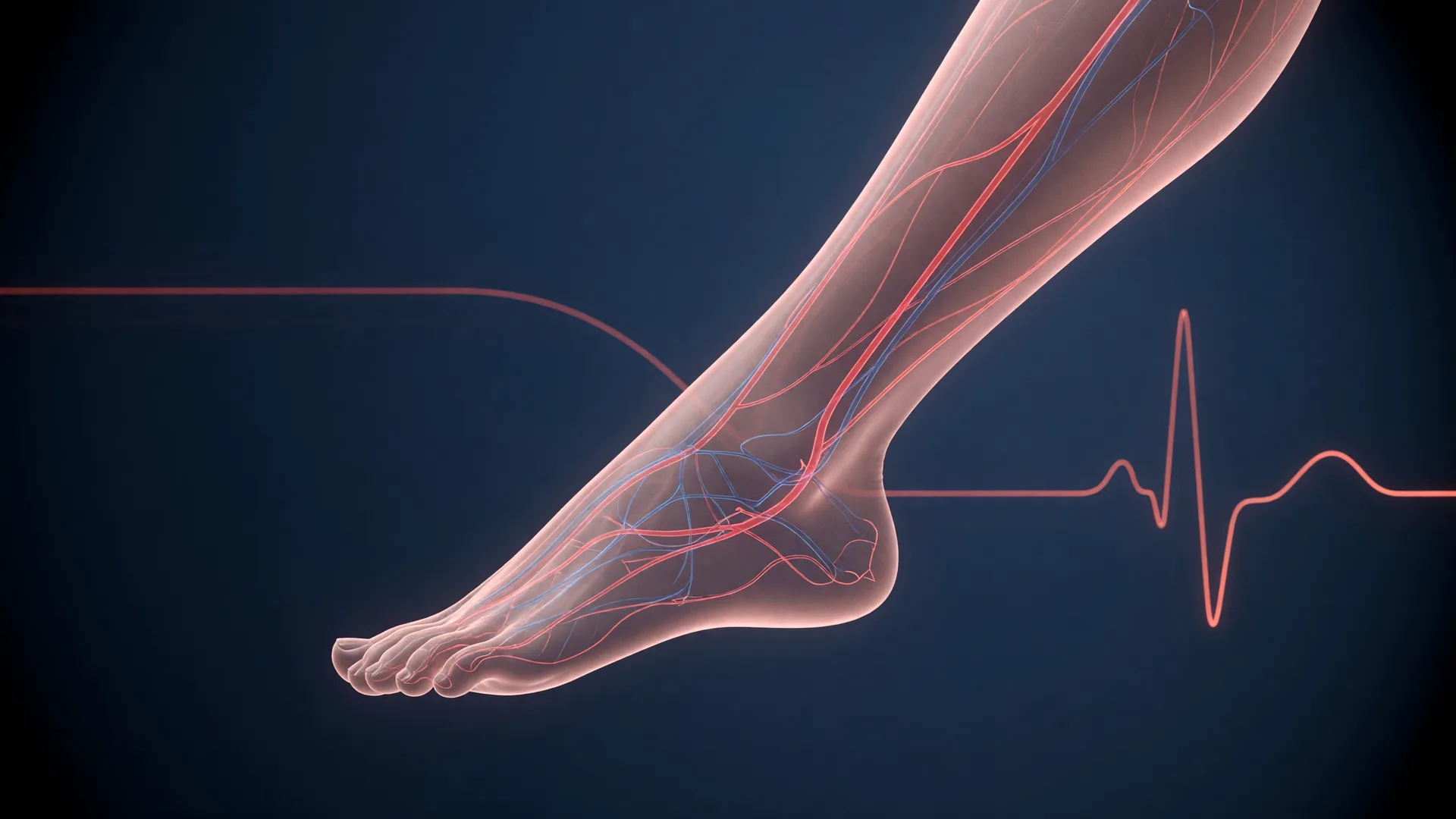
PAD is a form of atherosclerosis, the same plaque buildup that causes coronary artery disease, but in the arteries that carry blood to the limbs. When plaque narrows the leg arteries, muscles receive less oxygen-rich blood, especially during activity. The lower legs are the part of the body affected most often.
PAD is common: the CDC reports that about 6.5 million people in the United States aged 40 and older live with it, and prevalence rises sharply with age. Recognizing it early matters because the same disease process that narrows leg arteries can narrow the arteries feeding the heart and brain.
What Are the Symptoms of PAD?
The classic symptom is intermittent claudication: a cramping, aching or fatigue in the calf or thigh that comes on during walking and eases with rest. But up to 4 in 10 people with PAD have no leg pain at all, which is why it often goes undiagnosed.
Physical signs can include weak or absent pulses in the feet, skin on the legs or feet that feels cool to the touch, hair loss on the legs, smooth or shiny skin, and sores or ulcers on the toes or feet that heal slowly. Any of these deserve an evaluation with a qualified healthcare professional.
Who Is at Higher Risk for PAD?
According to the CDC and the American Heart Association, the strongest risk factors are smoking and diabetes, followed by age over 60, high blood pressure, high cholesterol, atherosclerosis, a personal history of heart disease or stroke, and chronic kidney disease. Family history contributes as well.
Many of these risk factors are manageable, which is one reason PAD screening discussions are worthwhile for at-risk adults. A conversation about your history costs nothing and can change the trajectory of your vascular health.
Why Early Evaluation Matters
PAD is not just a leg problem. The American Heart Association notes that PAD increases the risk of heart attack, stroke and amputation, and that early diagnosis and treatment are essential to improve outcomes and reduce amputation risk. That is why unexplained leg pain with walking, cool or numb feet, or slow-healing leg sores deserve attention rather than a wait-and-see approach.
Treatment for PAD is directed by a physician and may include smoking cessation, diabetes management, blood pressure and cholesterol control, structured walking programs and, in some cases, medications or procedures. A wellness center does not treat PAD, but recognizing the signs is where awareness starts.
How Circulation Support Fits Into a Broader Plan
Non-invasive circulation therapies do not treat PAD and are not a substitute for medical care, but they can complement the lifestyle side of a vascular health plan discussed with your doctor. At Thrive EECP in Draper, circulation-focused programs, dynamic compression therapy and dedicated vascular wellness programs are designed to support blood flow and recovery in different ways.
The honest starting point is a vascular risk conversation: ask your doctor about PAD if you have risk factors, then decide whether supportive therapies make sense for you. Thrive EECP is at 1111 East Draper Parkway, Draper, UT 84020, and serves patients from across the South Salt Lake Valley and northern Utah County. Call 385-330-0358 to talk through your questions.
Sources & References
Independent, authoritative sources used in this article, linked so you can verify the details yourself. Information here is educational and not a substitute for medical advice.
Want to Explore This Further?
This article is part of the Thrive EECP Health Library in Draper, Utah. If the topic above sounds relevant to you, the next step is a free, no-pressure conversation about your goals.
About the Author
This article was authored and curated by Phil Kim for the Thrive EECP Health Library, with content guidance from the Thrive team. It is educational information, not medical advice, and does not create a patient relationship. Always consult a qualified healthcare professional about your health.